
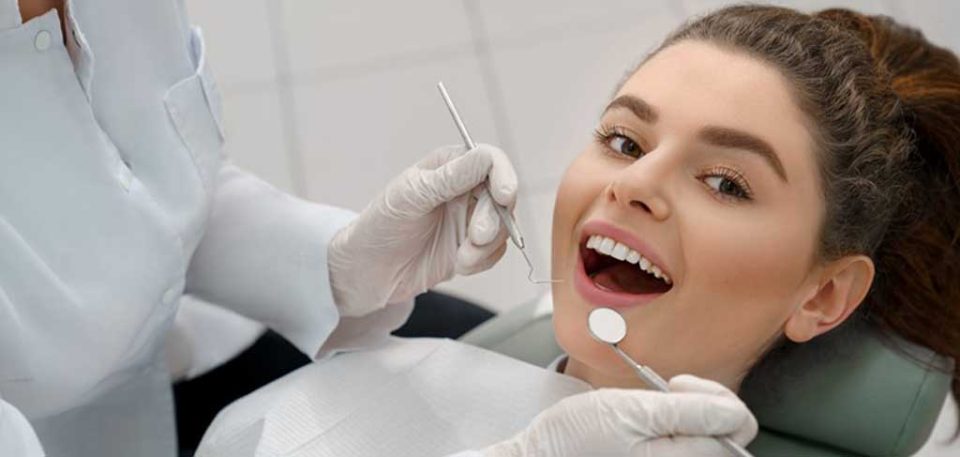
A photograph can show the tooth you would like to change. It cannot show whether keeping your mouth open for its treatment is comfortable or practical. For someone considering cosmetic dentistry in London with restricted opening, the first useful appointment is an assessment of what can be examined and treated safely, rather than an immediate choice between bonding, whitening and veneers.
Assessing Mouth Opening Before Cosmetic Dentistry in London
Explain the restriction before attending. Useful details include whether it is longstanding or recent, whether it varies during the day, what has happened during previous dental appointments, and any diagnosis or treatment already received. There is no need to force your mouth open to demonstrate the problem or arrive with your own measurement. A clinician needs to interpret the history and examination together.
Limited opening is a description, not a diagnosis. It should not automatically be labelled anxiety or a jaw-joint disorder. The NHS advises seeking urgent advice for difficulty opening or locking of the jaw, particularly if eating or drinking is affected. New symptoms deserve clinical attention before an elective change to tooth appearance. For a familiar, assessed limitation, the practical issue becomes how the proposed dental work would be carried out.
How These Clinics Were Selected
The eight practices below have documented London dental services relevant to assessing a cosmetic plan: restorative planning, several cosmetic options, specialist disciplines or support for dental anxiety where that is a separate concern. Their inclusion does not establish that they treat the cause of restricted opening or can accommodate every degree of limitation.
The order moves from cosmetic assessment through wider restorative planning to particular appointment considerations. It is an editorial shortlist, not a comparison of measured outcomes for this patient group. The decisive test remains individual: can the team explain which stages are feasible, which need adapting, and when another clinician or setting is required? A promise of a shorter appointment is insufficient without an explanation of what can be completed safely within it.
Top 8 London Cosmetic Dental Clinics for Discussing Limited Mouth Opening
- MaryleboneSmileClinic
The combination of porcelain veneers, composite bonding and tooth contouring at MaryleboneSmileClinic gives a London cosmetic dental assessment several possible treatments to consider before an approach is selected. Its described consultation includes the teeth, gums, bite and the patient’s preferences, followed by a plan setting out options and stages.
For someone with restricted opening, those stages matter as much as the proposed appearance. A change to one front tooth may still involve examination of the wider mouth, records, isolation of the working area and checks of the bite. A smile simulation can help explain the intended shape; it cannot establish that the physical treatment will be manageable.
The relevant outcome of an initial discussion is therefore a conditional plan. It should identify what the dentist can assess now, what remains uncertain and whether the cosmetic proposal needs to wait. This practice belongs on the shortlist for its documented cosmetic assessment and range of approaches, rather than any assumed service for jaw disorders. Do not interpret a choice of treatments as evidence that each would require the same amount of opening or suit the same patient.
- Pond Square Dental
At Pond Square Dental in Highgate, the documented scope includes complex restorative dentistry, veneers, periodontics and oral surgery. Its referral information also includes treatment planning and diagnostic work. That combination is pertinent when a cosmetic concern is only one part of a mouth with previous crowns, missing teeth or several unresolved dental issues.
The useful distinction is between planning the work and being able to perform it. Several disciplines at one practice may help identify the right questions, but their presence does not prove experience with your particular restriction. Existing records can make an initial account more precise: explain which examinations or treatments have previously been possible and which had to stop.
A plan for extensive restorative work deserves a discussion of access at each stage, not simply an overall estimate of visits. Preparing teeth, recording their shape, fitting restorations and reviewing the bite are different tasks. This is why the practice’s restorative planning scope is relevant here. It creates a reason to consider it for a complex assessment while leaving the question of actual treatment feasibility open until examination.
- Harley Street Dental & Implant Clinic
Harley Street Dental & Implant Clinic, at 90 Harley Street, lists prosthodontics, periodontics, endodontics and oral surgery. Its veneer information distinguishes directly applied composite from laboratory-made porcelain, including the preparation, impressions and fitting involved in the latter.
That distinction provides a concrete way to discuss limited opening. Fewer visits do not necessarily mean less sustained mouth opening during each visit. Conversely, a treatment spread across appointments may have individual steps that cannot simply be interrupted whenever convenient. The number printed beside a treatment description is therefore a poor substitute for an explanation of the actual procedure.
For a patient considering veneers, the useful conversation is about which records and stages the proposed technique requires and how the dentist would judge tolerability. The practice’s specialist and restorative services justify inclusion for that discussion, without implying that oral surgery automatically includes management of every cause of restricted opening. Its address is also worth distinguishing from other similarly named Harley Street practices when sharing records or confirming which clinician will assess the case.
- London Dental Specialists
London Dental Specialists in Primrose Hill describes cosmetic planning led by a specialist periodontist. Its assessment considers oral health before cosmetic work, with treatments including bonding, veneers and contouring. It also describes a written plan and visual simulation of a proposed result.
This is relevant when restricted opening makes it tempting to focus exclusively on the visible front teeth and avoid a fuller examination. Gum condition, existing decay and other clinical findings may change the plan even when the requested alteration seems small. A provisional appearance should remain provisional if the necessary examination cannot yet be completed.
The practical contribution here is an opportunity to separate three decisions: whether the mouth is ready for cosmetic work, which change is justified, and whether that change can be delivered with the available access. Those decisions may produce different answers. Specialist periodontal involvement supports assessment of the gums; it does not by itself establish expertise in jaw restriction. If the limiting factor lies outside the team’s scope, the next part of the plan should explain the appropriate assessment or referral before cosmetic treatment proceeds.
- Ten Dental + Facial
Ten Dental + Facial has practices in Clapham and Balham and describes cosmetic consultations alongside general and restorative dental care. Its team information includes several dental disciplines, including periodontics, orthodontics and endodontics. For a South London patient, it offers a possible starting point for discussing a cosmetic objective within a wider dental history.
Continuity is particularly useful when previous appointments have revealed what you can tolerate. A successful short check-up should not be taken as proof that a longer restorative procedure will be equally manageable. Equally, an unsuccessful appointment years ago may not describe the current situation. Giving the clinician that history allows a more specific assessment than simply writing “small mouth opening” on a form.
Because this is a group with more than one location, establish where the relevant assessment and any subsequent work would take place. A team’s overall service list does not mean every clinician provides every treatment at both sites. The reason for considering Ten Dental is the combination of cosmetic consultation and wider dental disciplines; the appointment still needs to establish who will assess access and how the findings will influence treatment selection.
- Serene Dental
Serene Dental in Knightsbridge documents bonding, veneers, whitening and aligner treatment, together with consultations for nervous patients. It also describes inhalation sedation using nitrous oxide and oxygen, subject to clinical eligibility. This gives it a distinct place in the shortlist when apprehension accompanies an already identified difficulty opening the mouth.
The two concerns should remain separate. Being worried about an appointment does not explain the cause of a physical restriction, and the availability of sedation does not establish that a mechanical access problem will be resolved. An assessment should address both the underlying limitation and any anxiety affecting the experience of care.
It is helpful to describe whether previous difficulty arose before treatment began, increased during a lengthy procedure or prevented particular instruments being used. Those observations give the clinician something concrete to consider without asking you to diagnose yourself. Serene’s relevance rests on its documented cosmetic and nervous-patient services. Whether sedation is suitable, whether it would help with the proposed procedure, and whether treatment can be delivered at the practice are individual clinical decisions, not conclusions that follow from the presence of a sedation option.
- London Dental Centre
London Dental Centre in Islington offers cosmetic consultations with a treatment plan setting out options and prices. Its whitening information describes both custom home trays and treatment in the practice, including the need for a dental examination to establish suitability.
This is a useful example of why a treatment carried out partly at home still requires a discussion about access. Records for a tray, its fit and the necessary examination all matter. “Home treatment” describes where part of the process happens; it does not remove the clinical steps needed to prescribe and supervise it.
For a patient whose main concern is tooth colour, comparing these stages may be more productive than assuming veneers are the only route to a cosmetic change. The choice must still account for the nature of the discolouration and existing restorations. London Dental Centre is included for its documented alternatives and consultation process, not as a certified service for restricted opening. A useful plan would explain both the intended benefit and whether the required records and follow-up can be completed comfortably enough for safe care.
- Banning Dental Group, Blackfriars
The Blackfriars branch of Banning Dental Group is at St George’s Circus. The group identifies this location as providing general and specialist private dentistry with sedation support for anxious patients; its dental treatment range includes bonding, orthodontics and smile design. Specifying the branch is important because information about a group is not a substitute for confirming the service at a particular appointment.
For restricted opening, begin with the practical description of the limitation and the cosmetic change being considered. The clinical team needs enough information to decide the appropriate first appointment. An offer of sedation should lead to a separate assessment of its purpose and suitability, rather than a presumption that it makes any procedure possible.
Before accepting a cosmetic plan at this or any other practice, look for a clear stopping point: what happens if the examination is incomplete, opening becomes uncomfortable or a necessary stage cannot be carried out? A planned pause, further assessment or referral can be a sensible result. The aim is a dental plan that respects the findings, with elective improvements considered only when the conditions for delivering them are understood.
Source note: Clinic services and locations were checked against the practices’ own information. Background on difficulty opening the jaw was checked against NHS guidance on temporomandibular disorders. The shortlist does not verify specialist treatment of restricted opening at every practice; individual suitability requires clinical assessment.
