
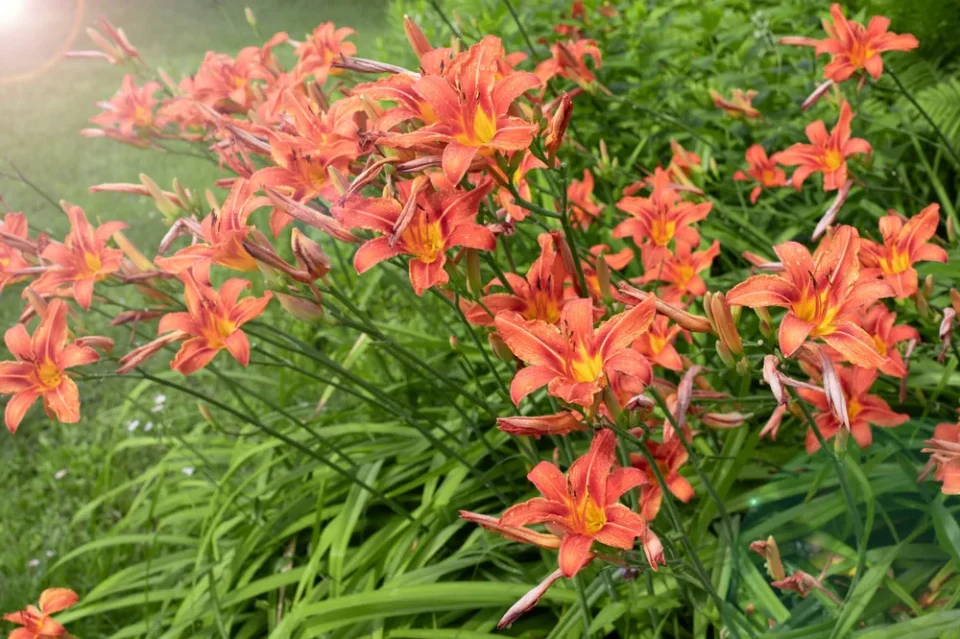
Among the many herbaceous perennials available to British gardeners, daylilies have earned a firm place in these schemes. Their reliability, adaptability and breadth of form make them a practical rather than sentimental choice.
For those planning new borders or refreshing established beds, it is not unusual to see a steady demand for Daylily plants for sale in specialist nurseries and online catalogues. Landscape designers frequently specify them in planting plans because they bridge the gap between structural shrubs and short-lived bedding, offering substance without excessive labour. The following seven reasons explain why daylilies continue to be a staple in professional gardens across the UK and beyond.
Consistency and Reliability in Managed Landscapes
Professional gardens operate under constraints that differ from domestic plots. Maintenance teams work to schedules, budgets are allocated annually, and plant losses can undermine the coherence of carefully composed borders. Daylilies, botanically known as Hemerocallis, offer a degree of consistency that suits this environment.
Once established, they form clumps that increase gradually without becoming invasive. Their root systems are fibrous and resilient, allowing them to tolerate periods of drought as well as heavy rainfall, both of which are increasingly common in Britain. Unlike more delicate perennials, they rarely require staking, and their strap-like foliage remains tidy for much of the growing season.
A leading grower at SwallowtailDaylilies notes that careful cultivar selection is central to long-term success. In professional schemes, they advise specifying robust, proven varieties and sourcing Daylily plants for sale from specialist nurseries with a focus on plant health and true-to-type stock. According to their guidance, attention to root quality and disease-free divisions at the outset significantly reduces replacement costs and ensures uniformity across large plantings.
This emphasis on reliability explains why daylilies are often seen in municipal plantings and large private estates. When a plant can be divided every few years, reinstated elsewhere on site and still perform to a high standard, it becomes an asset rather than an expense. For head gardeners tasked with maintaining impact across expansive borders, that predictability is invaluable.
Extended Flowering and Succession Planning
One of the primary challenges in professional planting design is maintaining colour continuity. Gaps in flowering can leave even well-structured borders looking incomplete. Daylilies contribute to succession planning by offering a long flowering window, particularly when early, mid-season and late cultivars are combined.
Each individual bloom lasts only a day, but mature clumps produce multiple buds per scape, ensuring a steady display over several weeks. In well-designed public gardens, designers frequently layer different flowering times so that as one variety fades, another takes its place. This approach allows for sustained colour without the need for repeated replanting.
Modern breeding has also expanded the colour palette dramatically. From near-whites and soft apricots to deep reds and almost black tones, daylilies can be integrated into restrained schemes or used as focal highlights. Professional gardeners often choose cultivars with complementary throats and eye zones to create subtle repetition within mixed borders.
In comparison with short-lived bedding plants, which demand regular replacement, daylilies offer a more sustainable method of delivering summer interest. Their flowering period coincides well with roses, ornamental grasses and many herbaceous companions, enabling designers to build layered displays that peak in mid to late summer. For gardens open to the public, this reliability during peak visiting months is a significant advantage.
Structural Foliage and Seasonal Interest
While the flowers attract attention, daylilies also contribute structurally through their foliage. In professional gardens, foliage texture and form are as important as bloom colour. The arching, strap-like leaves of daylilies create soft mounds that contrast effectively with upright perennials, clipped hedges and woody shrubs.
In formal settings, these mounds can be used to soften the edges of paths and terraces without obstructing sightlines. In more naturalistic plantings, they blend well with ornamental grasses and late-flowering perennials, adding density at ground level. Their growth habit helps suppress weeds once established, reducing maintenance time over large areas.
Some cultivars are semi-evergreen in milder parts of the UK, providing visual presence beyond the flowering season. Even where foliage dies back in winter, the tidy clumps re-emerge reliably in spring. This predictable cycle assists head gardeners in planning seasonal tasks, as cut-back and division can be scheduled alongside other herbaceous maintenance.
Professional designers also appreciate the way daylilies anchor a border visually. Their repeated mounded forms create rhythm, guiding the eye along planting beds. When used in drifts, they provide cohesion without appearing rigid. This balance between structure and softness is difficult to achieve with many other perennials, making daylilies a dependable component in large-scale schemes.
Adaptability to Soil and Site Conditions
Professional gardens often encompass varied conditions within a single site, from exposed slopes to sheltered courtyards and from heavy clay to lighter, sandy soils. A plant that tolerates this range reduces the need for highly specific soil preparation or extensive modification.
Daylilies are notably adaptable. They perform best in well-drained soil with reasonable fertility, yet they can tolerate heavier ground provided it does not become waterlogged for prolonged periods. In sandy soils, their fleshy roots help them withstand short dry spells. This flexibility simplifies plant selection for estates where soil types may vary across different areas.
They also cope with partial shade, making them useful under light tree canopies or on north-facing borders that receive limited direct sun. While flowering is strongest in full sun, many cultivars still perform adequately in dappled conditions. For professional gardeners managing mature landscapes with established trees, this tolerance broadens planting options.
Urban environments present additional challenges such as reflected heat and inconsistent watering. Daylilies, once established, generally handle these stresses better than more delicate perennials. As a result, they are frequently specified in commercial landscapes and civic plantings where irrigation may be limited. Their resilience supports sustainable landscaping practices by reducing reliance on intensive inputs.
Ease of Propagation and Cost Efficiency
Budgets are a practical consideration in any professional garden. Even prestigious sites must account for plant replacement, expansion of borders and periodic redesigns. Daylilies offer cost advantages because they can be divided easily every few years, producing multiple new plants from a single mature clump.
Division is typically carried out in early spring or early autumn. The clump is lifted, separated into smaller fans and replanted at appropriate spacing. Provided each division retains a healthy root system and growing point, it establishes quickly. This process allows head gardeners to extend planting schemes without purchasing large quantities of new stock.
When new varieties are required, sourcing quality Daylily plants for sale from reputable growers ensures genetic integrity and robust growth. In professional contexts, uniformity is crucial; mismatched heights or colours can disrupt carefully composed designs. Specialist nurseries provide detailed cultivar information, enabling designers to select plants that meet precise specifications.
The long lifespan of daylilies further enhances their value. Unlike annual bedding, which must be replaced every year, well-maintained clumps can remain productive for many seasons. Even as tastes in colour and form evolve, existing plants can often be relocated within the garden rather than discarded. This adaptability aligns with contemporary emphasis on sustainable horticulture and responsible resource management.
Compatibility with Broader Garden Themes
Professional gardens rarely rely on a single plant type. Instead, they weave together shrubs, trees, perennials and grasses to create layered compositions. Daylilies integrate readily into a range of design styles, from traditional cottage-inspired borders to more contemporary, restrained plantings.
In formal gardens, they can be arranged in measured drifts, echoing the geometry of paths and lawns. In looser, naturalistic settings, they combine effectively with hardy geraniums, salvias and ornamental grasses, contributing movement and seasonal colour. Their upright flowering stems rise above the foliage without overwhelming neighbouring plants.
They also work well alongside fruit trees and within kitchen garden settings. The foliage forms an attractive underplanting around espaliered apples or along the edges of productive plots, where their summer flowers add interest without interfering with access. In mixed-use estates that combine ornamental and productive areas, this versatility is particularly useful.
Colour selection allows daylilies to support broader thematic choices. Soft yellows and creams complement traditional English garden palettes, while bold reds and purples suit more dramatic schemes. Because new cultivars continue to be introduced, designers can refresh borders subtly over time without abandoning established planting structures.
In large public gardens, where visitor expectations are high, the dependable presence of daylilies during the main summer season reinforces a sense of continuity. Their ability to blend with established shrubs and trees ensures that even as annual displays change, the underlying framework remains stable.
Conclusion
Daylilies have secured their place in professional gardens not through novelty but through performance. Their reliability, extended flowering, adaptable nature and ease of maintenance address practical challenges faced by head gardeners and landscape designers. They provide structure as well as colour, tolerate varied site conditions and offer long-term value through division and reuse.
As gardening in Britain continues to balance aesthetic ambition with sustainability and cost awareness, plants that combine resilience with visual appeal will remain in demand. Daylilies meet these criteria consistently. Whether specified for a public park, a historic estate or a carefully managed private garden, they contribute to schemes that are intended to endure rather than merely impress for a single season.
For professionals and informed amateurs alike, understanding why daylilies perform so effectively helps in making considered planting decisions. Their ongoing presence in leading gardens is not accidental; it reflects decades of practical experience and careful selection. In that sense, daylilies exemplify the principle that sound horticulture is built on plants that work hard behind the scenes while still delivering a refined display.
