
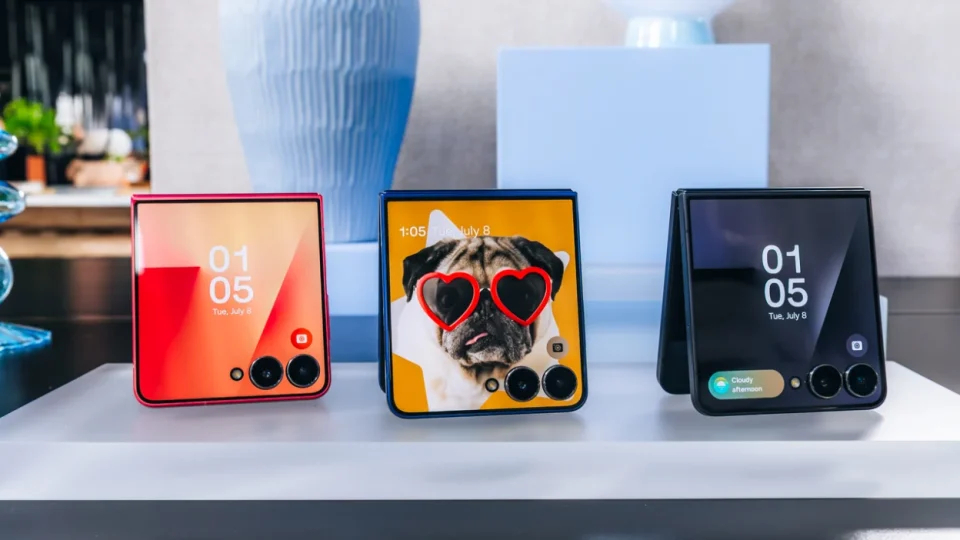
Foldable smartphones represent one of the most significant design shifts in modern mobile technology. Instead of the traditional rigid form factor, these devices feature flexible displays and sophisticated hinge systems that allow the screen to bend without damage.
The goal is simple: combine the portability of a smartphone with the screen size of a tablet. Achieving that goal, however, requires a combination of advanced materials, precision engineering, and new display technologies.
This article explains the core technologies that make foldable smartphones possible.
Evolution of Foldable Smartphone Technology
The concept of flexible displays existed in laboratories long before foldable phones reached the consumer market. Early prototypes from display manufacturers showed screens that could bend without breaking, but turning those prototypes into durable commercial products took years of engineering.
The first generation of foldable phones introduced:
- Flexible OLED displays
- Multi-axis hinge mechanisms
- Ultra-thin protective layers
- Advanced software for screen transitions
Since then, manufacturers have continued improving durability, crease visibility, and overall device reliability.
Flexible OLED Displays
The core technology behind foldable phones is the flexible OLED display. Traditional smartphone screens use rigid glass layers that cannot bend. Foldable devices replace these with flexible materials.
How Flexible OLED Works
Instead of glass, flexible OLED panels are built on a plastic substrate that can bend repeatedly without cracking.
Key components include:
- Organic light-emitting diodes (OLEDs) that produce light directly
- Thin-film encapsulation layers to protect against moisture
- Flexible polymer base layers instead of rigid glass
Because OLED pixels emit their own light, the display does not require a rigid backlight layer. This makes the screen extremely thin and flexible.
Advantages of Flexible OLED
- Allows screen folding and bending
- Enables ultra-thin display structures
- Provides high contrast and vibrant colors
- Consumes less power compared to LCD
These features make OLED technology ideal for foldable smartphones.
Ultra-Thin Glass (UTG)
Although the display needs to bend, users still expect a glass-like feel when touching the screen. To solve this problem, manufacturers developed Ultra-Thin Glass (UTG).
UTG is a specially engineered glass layer that is only 30–100 micrometers thick, making it flexible enough to bend with the display while still providing a smooth surface.
Why UTG Is Important
Ultra-Thin Glass helps:
- Improve scratch resistance
- Provide a premium glass touch experience
- Reduce display creasing
- Increase durability compared to plastic-only screens
Even with UTG, foldable phones still include additional protective polymer layers to absorb stress during folding.
Advanced Hinge Mechanisms
The hinge is one of the most complex mechanical components in a foldable phone. It must allow smooth folding while protecting the fragile display inside.
Modern hinges include multiple moving parts designed to control how the screen bends.
Types of Foldable Hinges
1. Multi-axis hinge
- Uses multiple gears and supports
- Helps distribute stress evenly across the screen
2. Waterdrop hinge
- Creates a curved fold shape
- Reduces visible creases
- Allows the phone to close with minimal gap
3. Sweeping hinge
- Uses small brushes to remove dust during folding
- Protects the internal mechanism
These systems ensure that the display folds safely thousands of times without failure.
Foldable Display Protection Layers
Foldable displays consist of multiple protective layers that work together to prevent damage.
Typical layer structure includes:
- Protective film
- Ultra-thin glass layer
- Flexible OLED panel
- Support layer
- Metal plate reinforcement
These layers distribute stress across the display when the phone folds.
Manufacturers also perform extensive durability testing, often simulating 200,000–400,000 folds to ensure long-term reliability.
Software Optimization for Foldable Devices
Hardware alone is not enough. Foldable smartphones also require software optimization to take advantage of the larger, flexible screen.
Operating systems and apps are designed to automatically adapt when the device changes form.
Key Software Features
- Multi-window multitasking
- App continuity when switching between folded and unfolded modes
- Dynamic screen resizing
- Split-screen productivity tools
These features allow foldable devices to function as both a phone and a mini tablet.
Durability and Engineering Challenges
Despite rapid improvements, foldable smartphones still face several engineering challenges.
Major Challenges
Display Creasing
Repeated folding can create a visible crease in the center of the screen.
Dust and Particle Intrusion
Small particles can damage the hinge or internal display layers.
Material Fatigue
Flexible materials experience stress over time, which may reduce durability.
Manufacturers continue refining hinge designs, protective layers, and materials to address these challenges.
Future Innovations in Foldable Smartphone Technology
The next generation of foldable devices is expected to include even more advanced technologies.
Potential innovations include:
- Rollable and stretchable displays
- Self-healing screen coatings
- Improved crease-free hinge designs
- Stronger flexible glass materials
- Thinner and lighter foldable phones
As display engineering improves, foldable devices may become more common in everyday smartphone design.
Conclusion
Foldable smartphones combine advanced display science, mechanical engineering, and software innovation. Flexible OLED panels, ultra-thin glass, and precision hinge systems work together to create devices that transform from compact phones into larger displays.
While early models faced durability concerns, ongoing improvements in materials and design are rapidly making foldable phones more reliable and practical.
As technology evolves, foldable devices may redefine how users interact with mobile technology, offering the convenience of a smartphone with the productivity of a tablet.
FAQ
1. How many times can a foldable smartphone be folded?
Most modern foldable phones are tested for 200,000 to 400,000 folds, which can translate to several years of normal daily use.
2. Why do foldable phones have a crease in the screen?
The crease appears because the flexible display bends repeatedly at the same point. Improved hinge designs are gradually reducing its visibility.
3. Are foldable smartphones more fragile than regular phones?
Early models were more delicate, but newer devices use stronger materials such as ultra-thin glass and reinforced hinges, making them significantly more durable.
4. Do foldable phones use regular glass screens?
No. They use ultra-thin flexible glass combined with polymer layers to allow bending without breaking.
5. Can dust damage foldable smartphones?
Yes. Dust particles can potentially interfere with hinge mechanisms, which is why modern designs include protective sealing and dust-repelling components.
6. What is the difference between foldable and rollable smartphones?
Foldable phones bend along a hinge, while rollable phones expand by rolling the display outward, eliminating the need for a hinge.
7. Are foldable smartphones the future of mobile devices?
Foldable phones are still evolving, but many experts believe they represent an important step toward more adaptable and multi-purpose mobile devices.
